Add a framework. Don't add a rebuild sprint.
Every time a new mandate appears, most GRC programs face the same decision: rebuild the control library or accept the gap. Kyūdō's Framework Registry eliminates the rebuild. One evidence base satisfies every framework simultaneously through the Secure Controls Framework (SCF), an industry-standard crosswalk covering 80+ mandates. Add CMMC to an existing SOC 2 program and your current evidence carries over automatically. No rebuild. No consultant. No delay.
Built for how compliance actually works.
Standard set of frameworks pre-loaded. Zero rebuild cost.
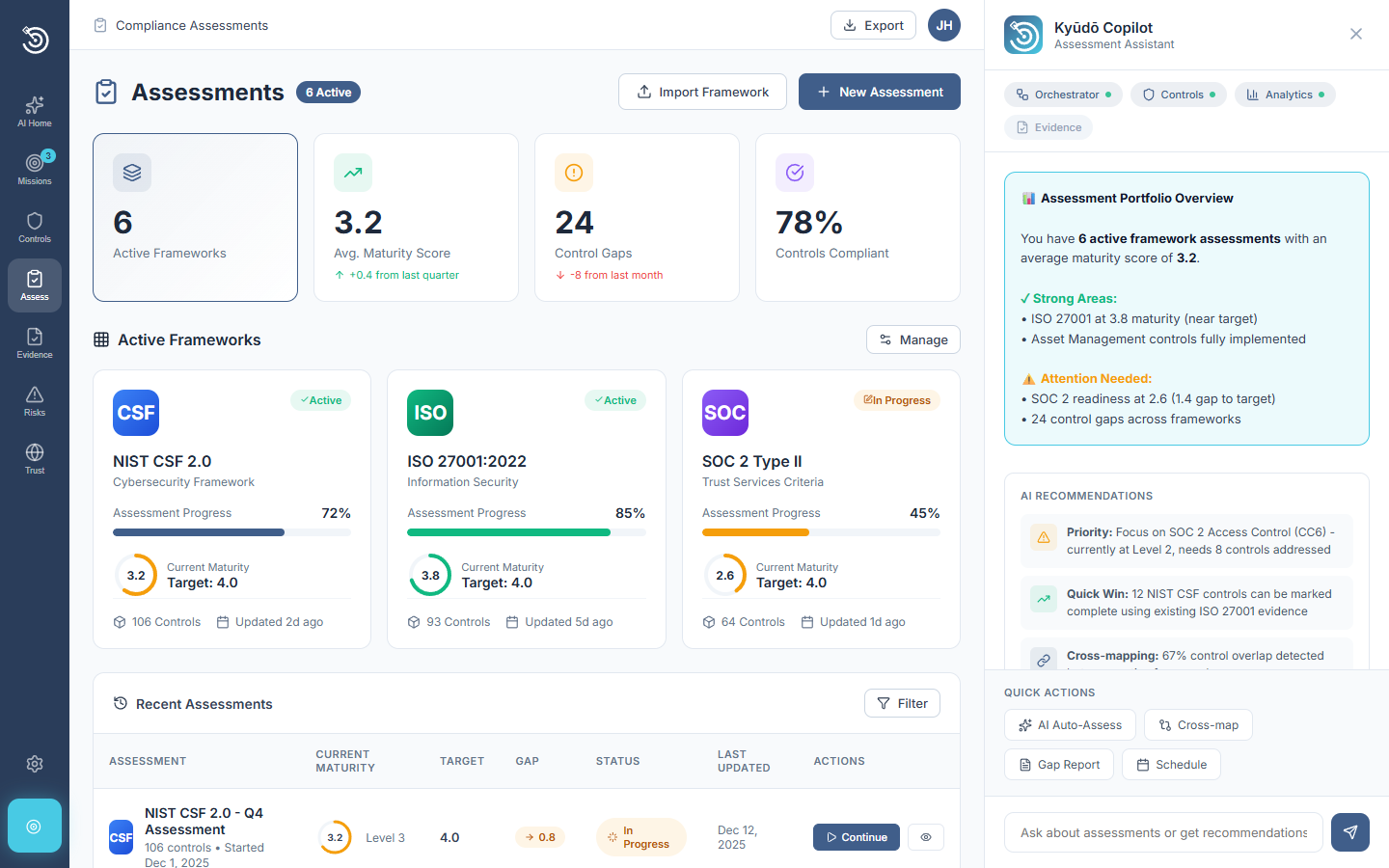
SOC 2, ISO 27001, CMMC, HIPAA, NIST CSF, NIST AI RMF, EU AI Act, and HITRUST. All eight ship pre-loaded and ready on day one.
Prove a control once. Every framework inherits it.
Evidence collected for one framework satisfies requirements in the others automatically. Zero duplicate evidence collection as your regulatory footprint grows.
Adding a framework doesn't add headcount
Zero marginal staff cost as your compliance footprint expands. Framework expansion is a configuration change, not a project.
Audit-ready evidence packages on demand
Generate framework-specific evidence packages formatted for external auditors, current as of today, for any active framework.
Framework Expansion Without the Rebuild Cost
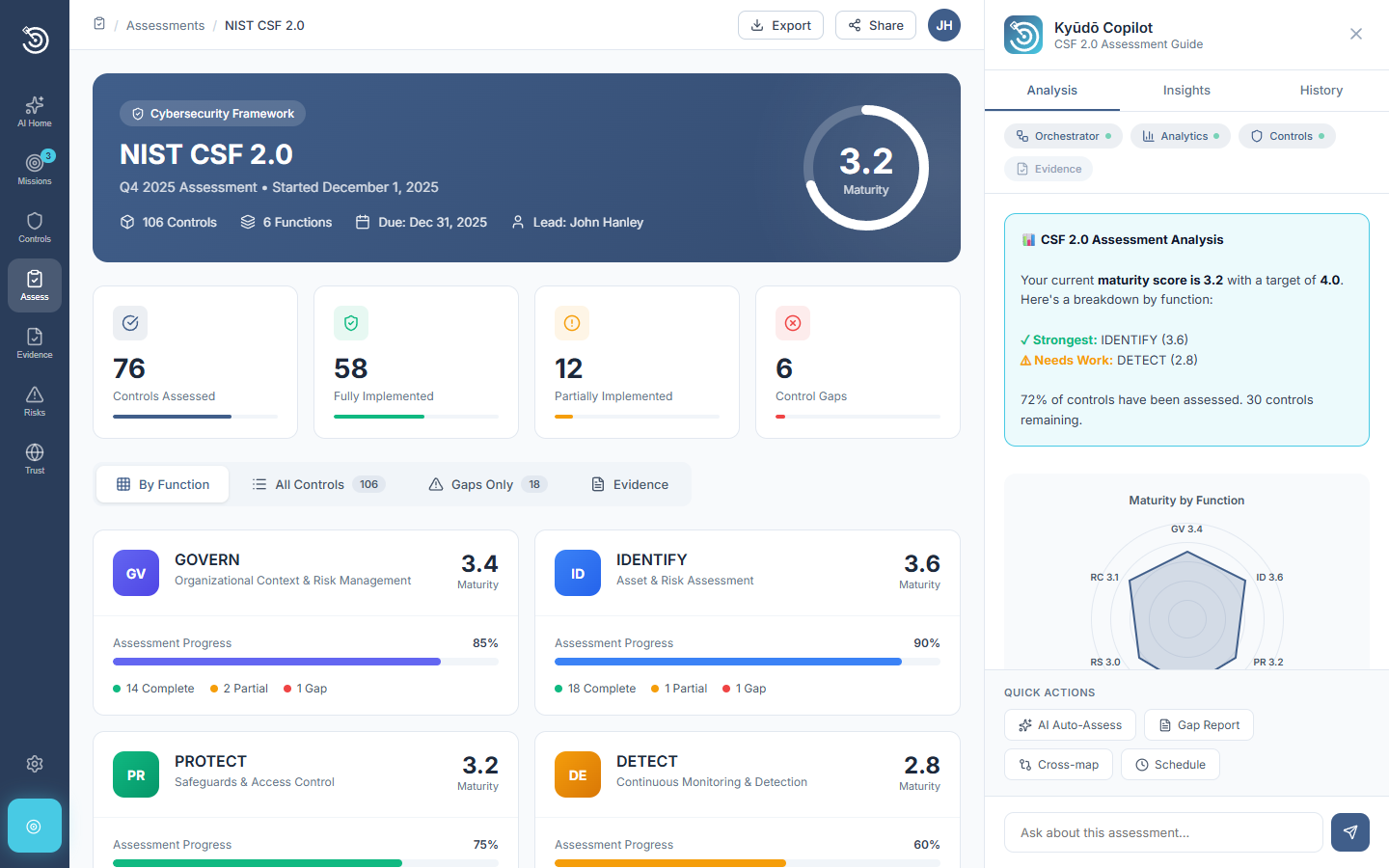
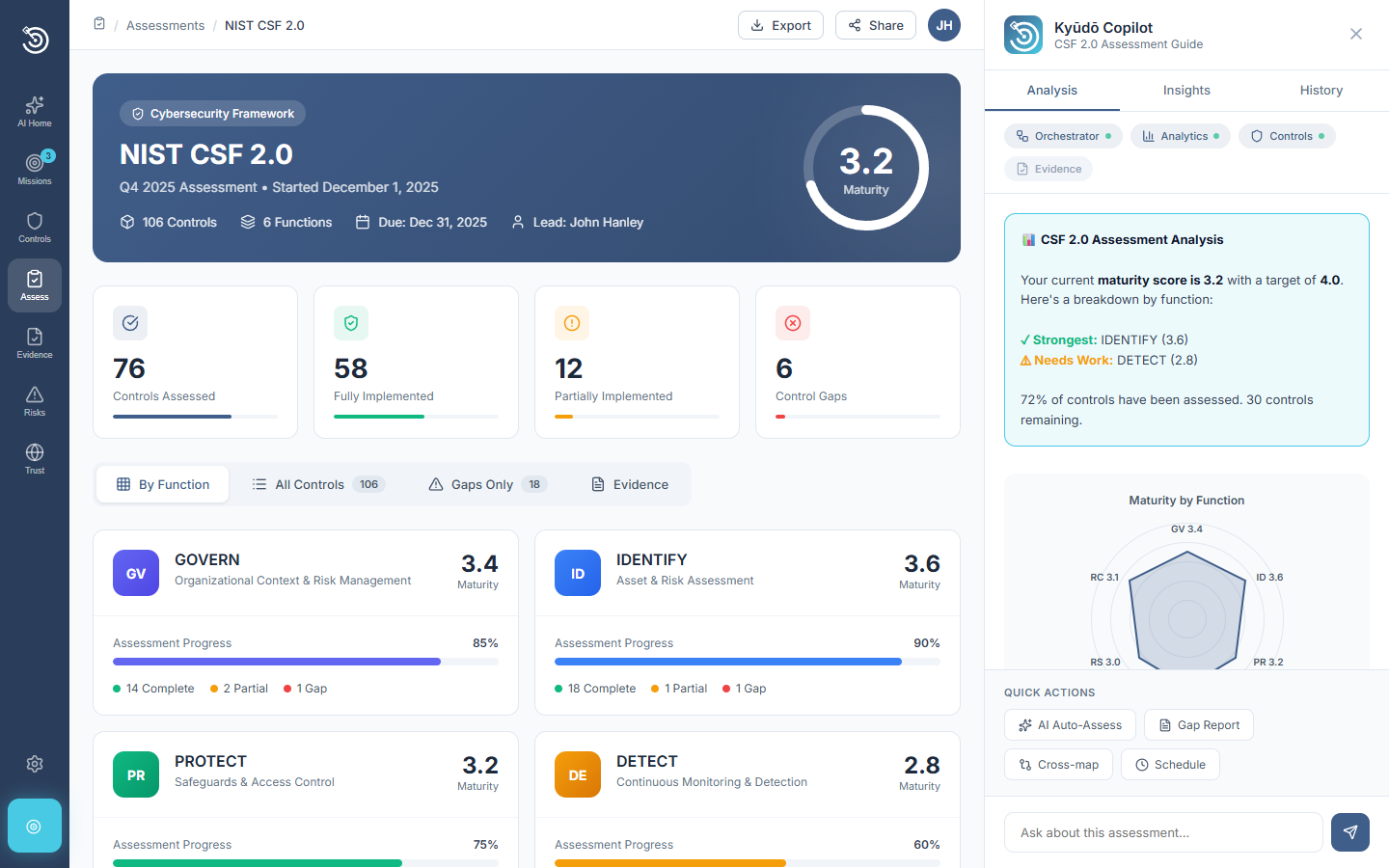
Each framework in the registry launches a structured assessment workflow: define scope, map applicable controls, collect evidence, and generate a gap report. Because controls and evidence are already mapped through the SCF crosswalk, most of the work is inherited from your existing program. Organizations running three or more frameworks project up to 90% reduction in manual effort versus maintaining separate evidence libraries per mandate.
Gap Analysis That's Always Current, Not Annual
The framework detail view shows control-by-control coverage across your current evidence set. Green controls have current, linked evidence. Amber controls have partial coverage. Red controls are unaddressed gaps with a suggested remediation path. The view refreshes as evidence arrives from integrations. Gap analysis is always current, not a point-in-time snapshot from last quarter's assessment.